
Papers
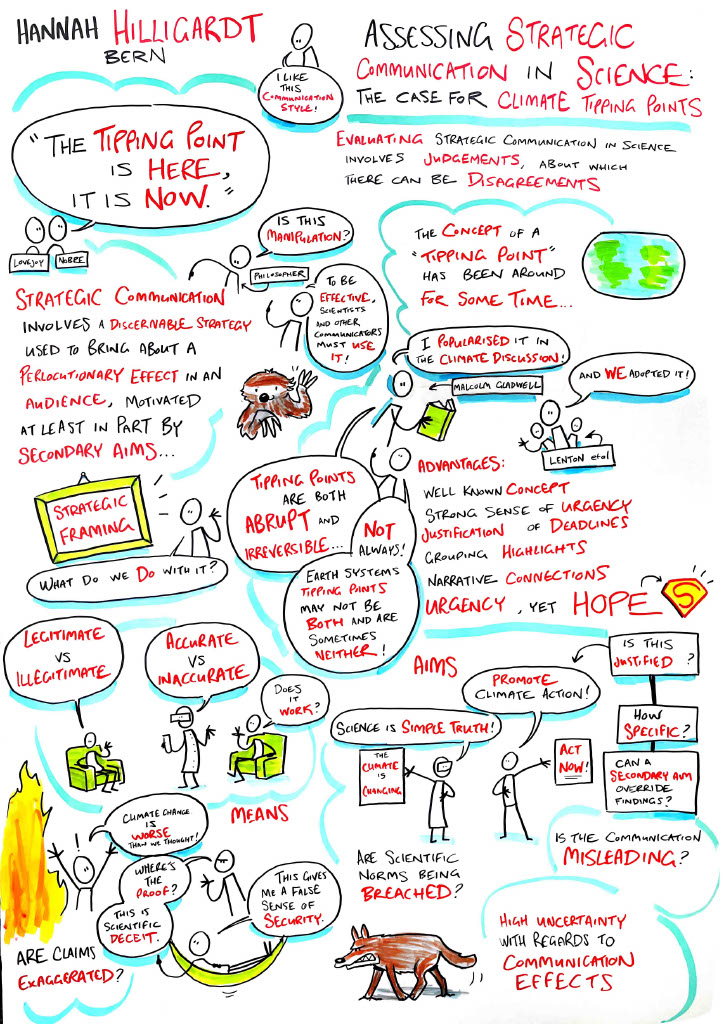
Strategic communication: The case of climate tipping points (under review)
Strategic communication by scientists has sparked debate among researchers, philosophers, and the broader public. In this paper I draw on diverse philosophical perspectives to outline three key areas of concern regarding such communicative practice: (1) the legitimacy of practical aims guiding scientific research and communication, (2) the ethical implications of specific communicative strategies, and (3) the likelihood of either desired effects or unintended effects to actualise. I argue that reasonable disagreement can exist both about the concerns themselves and about their relevance to specific cases.
These issues are explored through a case study on communication about climate tipping points—a topic that has drawn criticism within the climate science community for allegedly promoting climate action through strategic messaging. I use this ongoing controversy to illustrate and complement arguments and concerns from the philosophical literature.
Values in communicating deeply uncertain knowledge on climate tipping points (with Mathias Frisch)
Climate tipping points have received a growing amount of public attention in recent years, yet at the same time research on tipping points remains one of the most controversial areas of climate science. While some researchers argue that multiple tipping point risks ought to be taken seriously by policy-makers, others warn that tipping point research is deeply uncertain and should therefore be not be communicated, or at least in a different manner. In this paper we disentangle some of the assumptions that appear to motivate the critics’ charge: we show why research on climate tipping points and in particular a possible AMOC collapse is deeply uncertain and discuss normative implications that this has.
Authority and Trust in Science (with Hanna Metzen)
Science’s authority – or the erosion of science’s authority – is an important issue in philosophy of science, particularly within the values in science debate. However, despite its prevalence, the notion remains underdeveloped. First, it is unclear what authority is and how it differs from trust in science. Second, philosophers of science are ambiguous with regard to the type of authority they think science has and should have. In our talk, we will argue that science not only has epistemic authority, but also indirect political authority and potentially even direct political authority. Scientific authority should not be generally conflated with trust in science. As we show, this has consequences for value management strategies.
Events
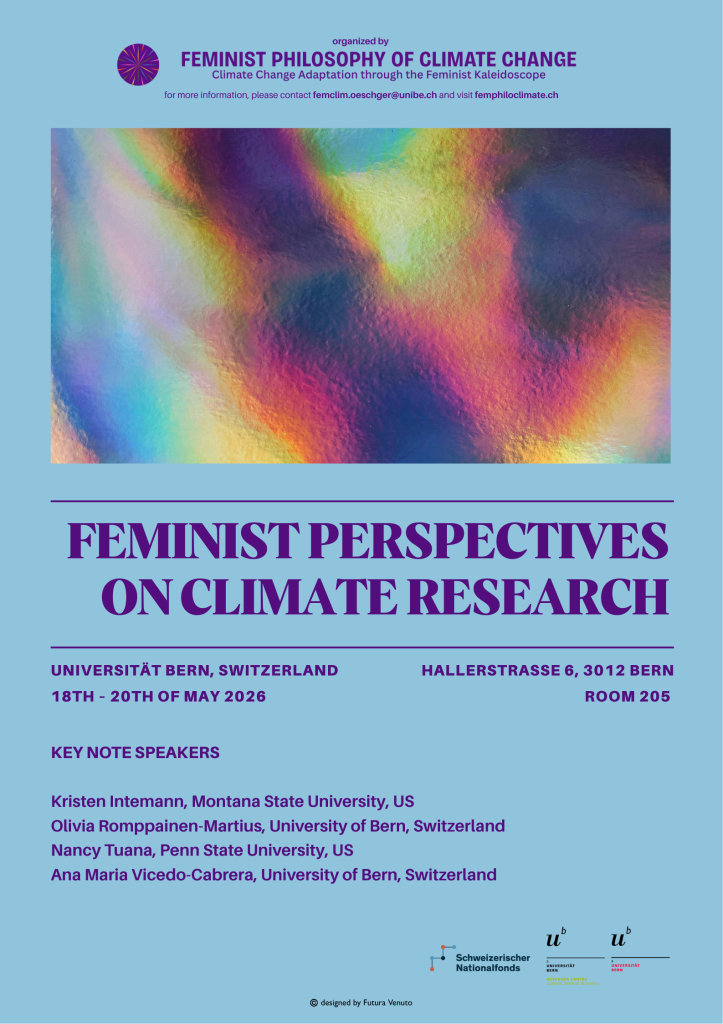
Workshop on Feminist Perspectives on Climate Research in May 2026
Upcoming workshop on the application of feminist epistemology to issues of injustice in climate research in Bern. More information can be found here.
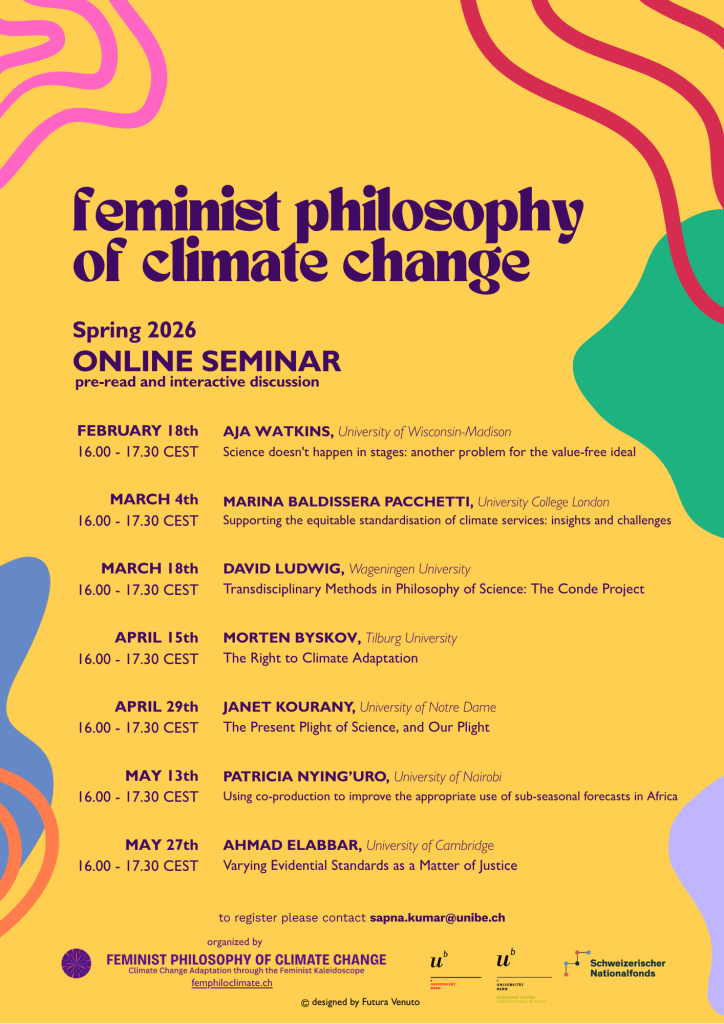
Online seminar
spring 2026:
My colleagues Sapna Kumar and Futura Venuto are continuing to organise an online seminar on feminist perspectives on climate change. You can find more information on our group’s website.
 Hannah Hilligardt